Work experience
2026 – present: Principal Investigator,
Faculty of Mathematics, University of Vienna.
I lead the ESA-funded study
Explainable Machine Learning for Space-Compatible Quantum Chips
,
developing explainable quantum machine learning methods for future space applications.
2024 – 2026: Marie Skłodowska-Curie Postdoctoral Fellow, Mathematics of Machine Learning Group, Faculty of Mathematics, University of Vienna.
Principal investigator of
BASE: Biologically-inspired Autonomous Systems for Space Exploration,
working on mathematical foundations of spiking neural networks and
self-organising, reconfigurable systems for space.
2021 – 2024: Internal Research Fellow in Artificial Intelligence, Advanced Concepts Team, European Space Agency, Noordwijk.
I conducted independent research on biologically inspired onboard AI,
graph machine learning, inverse materials design, neuromorphic computing, and memristors.
2020 – 2021: AI Residency Researcher,
Siemens AI Lab & Siemens Technology, Munich.
I developed graph-based machine learning methods for explainable anomaly
detection and neuromorphic methods for processing industrial knowledge graphs (e.g. spike-based relational graph neural networks).
Education
2016 – 2020: Dr. rer. nat. in Physics, Heidelberg University, Germany.
Thesis:
Harnessing function from form: towards bio-inspired artificial
intelligence in neuronal substrates.
Advisors: Mihai A. Petrovici, Walter Senn, Karlheinz Meier,
and Andreas Mielke. Research stay at the University of Bern,
Computational Neuroscience Group.
2014 – 2016: M.Sc. in Physics,
Heidelberg University, Germany.
Thesis:
Stochastic Computation in Spiking Neural Networks Without Noise.
2010 – 2014: B.Sc. in Physics,
Heidelberg University, Germany.
Thesis:
Energy Conservation in Fano Spectral Line Shape Control.
Research funding
Future start:
GAMU MASH StG/CoG.
Principal Investigator, Masaryk University.
CZK 12 million (approximately €500,000).
2026 – present:
ESA OSIP — Explainable Machine Learning for Space-Compatible Quantum Chips
.
Principal Investigator, University of Vienna. ESA contribution: €90,000
2024 – 2026:
Marie Skłodowska-Curie Actions Postdoctoral Fellowship —
BASE: Biologically-inspired Autonomous Systems for Space Exploration
.
Principal Investigator. Grant agreement 101103062.
EU contribution: €199,440.96.
2022:
ESA OSIP Co-Funded Project —
Novel Memristor-based Neural Network Accelerators for Space Applications
.
Co-Investigator. Funding for co-supervised PhD student. ESA contribution: €90,000.
Awards & distinctions
2026: ENNS Best Paper Award at ICANN 2026 for the publication Equivalence of approximation by networks of single- and multi-spike neurons.
2025: Invited to contribute a Brennpunkt article to Physik Journal (Deutsche Physikalische Gesellschaft).
2025: Invited to contribute a Viewpoint article to Physics (American Physical Society).
2024: Invited participant, Dagstuhl Seminar 25291: (Actual) Neurosymbolic AI: Combining Deep Learning and Knowledge Graphs.
2019: First prize, International Collegiate Competition for Brain-Inspired Computing , Tsinghua University, Beijing.
2019: Selected participant, Neuro-inspired Computation Course, International Research Center for Neurointelligence, University of Tokyo.
Supervision
Postgraduate researchers
2023 – present: Zacharia A. Rudge
Novel Memristor-based Neural Network Accelerators for Space Applications.
PhD candidate, TU Delft; co-funded through ESA OSIP.
2022 – 2023: Amy Thomas
Project mentor, ESA Young Graduate Trainee.
Graduate students
2024: Nadezhda Dobreva
Design of Decentralised Control of Self-Configuring Ensembles.
Internship, ESA ESTEC.
2023: India Walford
Novel Neural Network Architectures for Spacecraft Autonomy.
Internship and Master's thesis, ESA ESTEC & University College London.
2021: Victor Caceres Chian
Towards the Integration of Graph Neural Networks into Neuromorphic Architectures.
Master's thesis, Technical University of Munich.
2018: Maximilian Zenk
Spatio-temporal Predictions with Spiking Neural Networks.
Master's thesis, Heidelberg University.
Teaching
2025: Lecturer,
Mathematics of Data Science,
Master's in Data Science, University of Vienna.
Lecture notes →
Academic service
Editorial roles
2026: Editor, Proceedings of the 3rd Conference on AI in and for Space (SPAICE 2026) .
2026: Guest Editor, Acta Astronautica special issue SPAICE2025 — AI in and for Space .
2025 – 2026: Guest Editor, Astrodynamics, special issue SPAICE: AI in and for Space 2024 .
2024: Editor, Proceedings of SPAICE 2024: The First Conference on AI in and for Space .
Reviewing & expert panels
2026: Book manuscript reviewer, Cambridge University Press (Mathematics of Data Science).
2024 – 2025: Expert panel member and reviewer, UK Engineering and Physical Sciences Research Council (EPSRC).
2023: Technical Program Committee, International Joint Conference on Neural Networks (IJCNN).
2022 – present: Reviewer, Physical Review Research, npj Microgravity, RAS Techniques and Instruments, and several conferences.
Conference & event organisation
2026: Chair of the Scientific Committee, ESA SPAICE 2026 .
2026: Session Chair, International Conference on Artificial Neural Networks (ICANN 2026).
2025: Chair of the Scientific Committee, IAA-SPAICE 2025 .
2024: Chair of the Scientific Committee, ESA SPAICE 2024 .
2023 – 2025: Member of the Scientific Committee and Advisory Editor, Italian Association of Aeronautics and Astronautics (AIDAA).
2023 – 2024: Co-organiser, GECCO Space Optimisation Competition (SpOC).
2023: Chair, Artificial Intelligence Applications session, AIDAA XXVII International Congress.
2023: Session Chair, Linguistics and Graphs for Space (LING4S), ESA ESTEC.
2021: Session Chair, Graph Based Methods, IEEE International Conference on Machine Learning and Applications.
Institutional service
2024 – 2025: Organiser, Mathematics of Machine Learning & Data Science Seminar, University of Vienna.
2021 – 2023: Organiser, Advanced Concepts Team Science Coffee, European Space Agency.
2018 – 2020: Organiser, Electronic Vision(s) Journal Club, Heidelberg University.
Patents
Granted
Industrial device and method for building and/or processing a knowledge graph.
China: CN114819049A.
Method and system for anomaly detection in a network.
European patent:
EP4270227B1
.
United States:
US12425420B2.
Published patent applications
Method and system for anomaly detection in a network.
China: CN116980321A.
Method and Device for Providing a Recommender System.
Europe: EP4231199A1 · WIPO: WO2023160947A1.
Industrial device and method for building and/or processing a knowledge graph.
Europe: EP4030351A1 · USA: US20220229400A1.
Neuromorphic hardware for processing a knowledge graph represented by observed
triple statements and method for training a learning component.
Europe: EP4030349A1 · USA: US20220230056A1 · China: CN114819048A.
Neuromorphic hardware and method for storing and/or processing a knowledge graph.
Europe: EP4030350A1 · USA: US20220237441A1 · China: CN114819047A.
Outside work
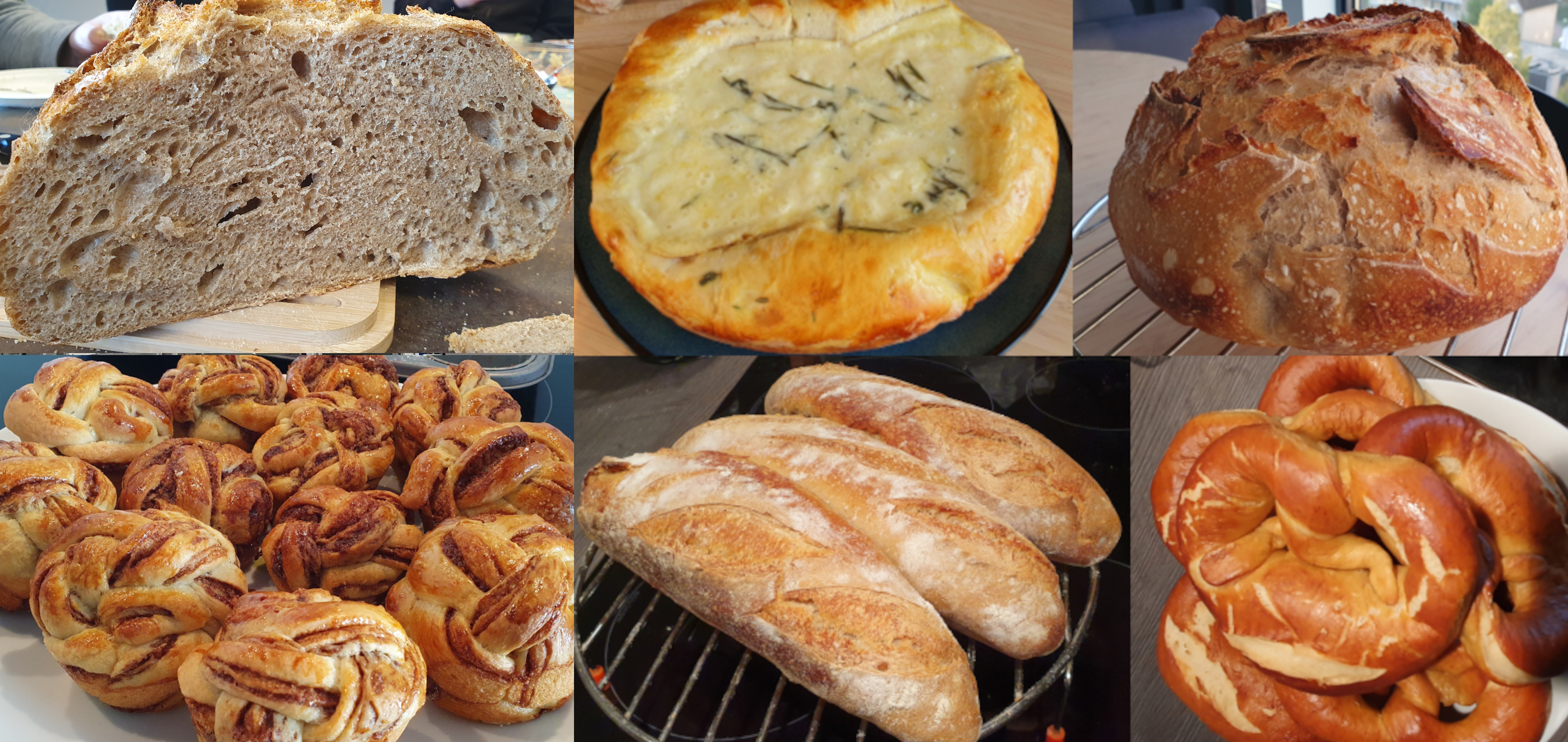
When I am not working, I very much enjoy playing video games, playing the piano and the electric guitar, baking (in particular breads!) and cooking, watching movies and tv series (especially sci-fi and fantasy), hiking, reading, and Yoga.